...

FFRF and Coalition Intervene to Block Religious Public School Ben Gamla

FFRF and a coalition are seeking to intervene in a lawsuit brought by the National Ben Gamla Jewish Charter School Foundation. The lawsuit, The National Ben Gamla Jewish Charter School Foundation Inc. v. Drummond, was brought by a religious organization trying to open the nation’s first religious public charter school in Oklahoma.

The coalition represents a group of seven Oklahoma taxpayers and families with children attending public schools. These plaintiffs oppose Ben Gamla’s effort to force Oklahoma to authorize and fund a religious public charter school. Plaintiffs object to their tax dollars funding a public charter school that will indoctrinate students into a particular religion. The proposed charter school would be in violation of Oklahoma and as well as federal law. In addition to violating the separation of church and state. Plaintiffs also object to public funds being diverted from their public schools to a religious school that plans to discriminate based on religion. 

FFRF has previously represented Oklahomans who challenged the first attempt to establish a religious charter school in their state. The Oklahoma Supreme Court declared this unconstitutional two years ago.

The intervenor-plaintiffs are represented by Americans United, Oklahoma Appleseed Center for Law & Justice, ACLU, Education Law Center, and FFRF Litigation Attorney Nancy A. Noet and Senior Counsel Sam Grover.

Case Documents

FFRF and Coalition Seeks to Block Religious Public Charter School Wilberforce Academy

The Wilberforce Academy of Knoxville Tennessee is attempting to run a religious public charter school funded by taxpayers that would provide an “explicitly biblical and Christian education.” The school filed the lawsuit The Wilberforce Academy of Knoxville v. Knox County Board of Education in order to force the Board of Education to fund their religious school.

On January 27, 2026, FFRF and a coalition filed a motion to intervene as an interested party in this case. This was on behalf of Knox County taxpayers who are all parents of current or former Knox County public school students. The court determined that these taxpayers had a legal right to participate in the lawsuit.

The intervenors, including two faith leaders, intervened in a lawsuit on the side of the defendants, the Knox County Board of Education and its members. They oppose a public charter school that will indoctrinate students into one religion. Additionally, they want to ensure that public schools remain secular and open to all. 

This lawsuit was filed in the U.S. District Court for the Eastern District of Tennessee. The intervenors are represented by the ACLU, the ACLU of Tennessee, Americans United for Separation of Church and State, The Education Law Center, Morrison Foerster, the Southern Poverty Law Center, and FFRF. Senior Litigation Counsel Sam Grover and Legal Fellow Kyle J. Steinberg are serving as attorneys for the proposed intervenors. 

Case Documents

South Carolina Resident Sues Over “So Help Me God” Requirement for Poll Workers

Plaintiff Jim Reel
Plaintiff Jim Reel

On October 8, 2025, FFRF filed a lawsuit on behalf of South Carolina resident Jim Reel. Reel sought to become a poll worker for the 2024 election. While he completed the required online training, he was not allowed to substitute a secular affirmation for the religious oath that was required as part of the application process. Reel is an atheist and due to his sincerely held convictions, he is unwilling to swear “so help me God.”

Reel asked the Greenville County voter registration and elections office whether a secular affirmation was available for poll workers in lieu of the religious oath. The office responded that a secular affirmation without “so help me God” would not be accepted. FFRF then sent a letter on Reel’s behalf to the State Election Commission. It noted that Article 6 of the U.S. Constitution prohibits the government from requiring any kind of religious test for public office. The director of the commission responded that “the County Boards must require it to be signed before trained candidates are appointed poll workers.” FFRF then followed up with the county election board and filed a lawsuit after the county refused to offer a secular alternative.

FFRF’s complaint argues that the defendants are coercing a statement of belief in a monotheistic deity, thereby denying nontheists or those worshiping more than one deity the right to serve as poll workers. Not only is Reel, as an atheist, barred from becoming a poll worker under this policy, but the rights of other South Carolina citizens who have no religious affiliation are also injured. Additionally, the defendants are denying Christians who belong to sects that eschew swearing oaths to a deity, such as some Mennonites, Baptists and Quakers, the right to serve as poll workers.

This lawsuit was filed in the US District Court of South Carolina. South Carolina attorney Steven Edward Buckingham is acting as local counsel, with FFRF Senior Litigation Counsel Sam Grover and Legal Fellow Kyle Steinberg acting as co-counsel. 

Case Documents

Texas Families Sue to Block Law Mandating Ten Commandments in Public Schools

Nathan et al v. Alamo Heights Independent School District et al

On July 2nd, 2025, FFRF and a coalition filed a lawsuit on behalf of a group of sixteen multifaith and nonreligious Texas families to block a state law requiring all public elementary and secondary schools to display the Ten Commandments in every classroom.

Texas Senate Bill 10 requires all public elementary and secondary schools statewide to display either a “durable poster” or “framed copy” of the Ten Commandments in a conspicuous location within every classroom. The law specifies a particular Protestant version of the Ten Commandments.

On August 20, 2025, the district court issued a preliminary injunction prohibiting the school districts from implementing the law. 

The plaintiffs include Jewish, Christian, Baptist, nonreligious, Hindu, and Unitarian families. The complaint argues that SB 10 violates both the Establishment Clause and Free Exercise Clause of the First Amendment to the U.S. Constitution, which protects the separation of church and state and guarantees religious freedom.

Case Documents
5th Circuit

Cribbs Ringer et al v. Comal Independent School District et al

On September 22, 2025, FFRF and a coalition filed a second lawsuit on behalf of a group of 15 nonreligious and multifaith Texas families.This new complaint is a response to school districts that have or are about to display Ten Commandments posters, despite the federal court’s ruling in the coalition’s other Texas case. 

On November 18, 2025, the district court issued a preliminary injunction requiring the named public school districts to remove Ten Commandments displays by December 1st and prohibiting them from posting new displays.

Case Documents

Ashby et al v. Schertz-Cibolo-Universal City Independent School District et al

On December 2, 2025, FFRF and a coalition filed a class action lawsuit on behalf of eighteen multifaith and nonreligious Texas families. This lawsuit aims to stop all Texas public school districts that are not already involved in active litigation or subject to an injunction from displaying the Ten Commandments in every classroom. It was filed in response to the districts who have not complied with the rulings in the previous two related cases and continue to unlawfully display the Ten Commandments. If successful, the temporary restraining order and preliminary injunction would apply to the more than 1,000 school districts in Texas.

Case Documents


All three lawsuits were filed in the U.S. District Court for the Western District of Texas. The plaintiffs are represented by the ACLU, the ACLU of Texas, American United for Separation of Church & State, Simpson Thacher & Bartlett LLP, and FFRF. Legal Director Patrick Elliott, Senior Litigation Counsel Sam Grover, and Litigation Attorney Nancy Noet are serving as co-counsel. 

Arkansas Families Sue to Block Law Mandating Ten Commandments in Public Schools

On June 11th, 2025, FFRF and a coalition filed a lawsuit on behalf of a multifaith group of seven families with children in Arkansas public schools to block a new state law requiring all public classrooms to display the Ten Commandments. 

Arkansas Act 573 of 2025 requires all public school classrooms and libraries to display the Ten Commandments on posters measuring at least 16-by-20 inches, positioned in a “conspicuous place.” The law specifies that the text must be printed in a size and typeface legible to anyone with average vision from anywhere in the room. Additionally, the statute mandates use of a specific version of the Ten Commandments associated with Protestant denomination. This version was selected by state lawmakers rather than individual schools or communities.

The plaintiffs—who are Jewish, Unitarian Universalist and nonreligious—assert that the statute violates longstanding U.S. Supreme Court precedent and the U.S. Constitution’s First Amendment.

On August 4, 2025, the Western District of Arkansas issued a preliminary injunction for the plaintiffs. This prohibits the school district defendants from “complying with Act 573 of 2025 by displaying the Ten Commandments in public elementary- and secondary-school classrooms and libraries.” This was followed by a permanent injunction on March 16, 2025.

The lawsuit was filed in the U.S. District Court for the Western District of Arkansas. The plaintiffs are represented by the ACLU, the ACLU of Arkansas, Americans United for the Separation of Church and State, Simpson Thacher & Bartlett, and FFRF. Legal Director Patrick Elliot, Senior Litigation Counsel Sam Grover, and Staff Attorney Nancy Noet are serving as co-counsel. 

Case Documents
District Court
8th Circuit

Quincy, MA Residents Sue to Stop Public Religious Statues

Mockup of the Quincy statues

On May 28th, 2025, FFRF and a coalition filed a lawsuit on behalf of a group of Quincy, Massachusetts residents to halt the planned installation of two large religious statues of Catholic saints at the entrance of Quincy’s new public safety building. 

The lawsuit centers on Mayor Thomas P. Koch’s 2023 plan to construct two 10-foot-tall bronze statues of Catholic saints and place them at the entrance of the building, which will house the headquarters of Quincy’s police and fire departments. The statues would cost taxpayers at least $850,000, yet the public only learned of the plan in February 2025 through local media reports.

FFRF’s lawsuit argues that the planned religious statues violate Article 3 of the Massachusetts Declaration of Rights by subordinating other religions to the Catholic faith.

On October 14, 2025, the Norfolk Superior Court granted the coalition’s preliminary injunction blocking the planned installation of the statues. The ruling ensures that the statues of St. Michael and St. Florian will not be installed while the case proceeds. The court also denied the city of Quincy’s motion to dismiss the lawsuit.

FFRF attorneys involved in this case are Legal Director Patrick Elliott and Legal Fellow Kyle Steinberg. Plaintiffs are also represented by the ACLU, the ACLU of Massachusetts, and Americans United for the Separation of Church and State. This case is in Norfolk Superior Court within the Commonwealth of Massachusetts with case number 2582CV00576.

Case Documents
Commonwealth of Massachusetts Superior Court
Massachusetts Court of Appeals

Wisconsin Residents Challenge Special Tax Exemption for Church-Owned Properties

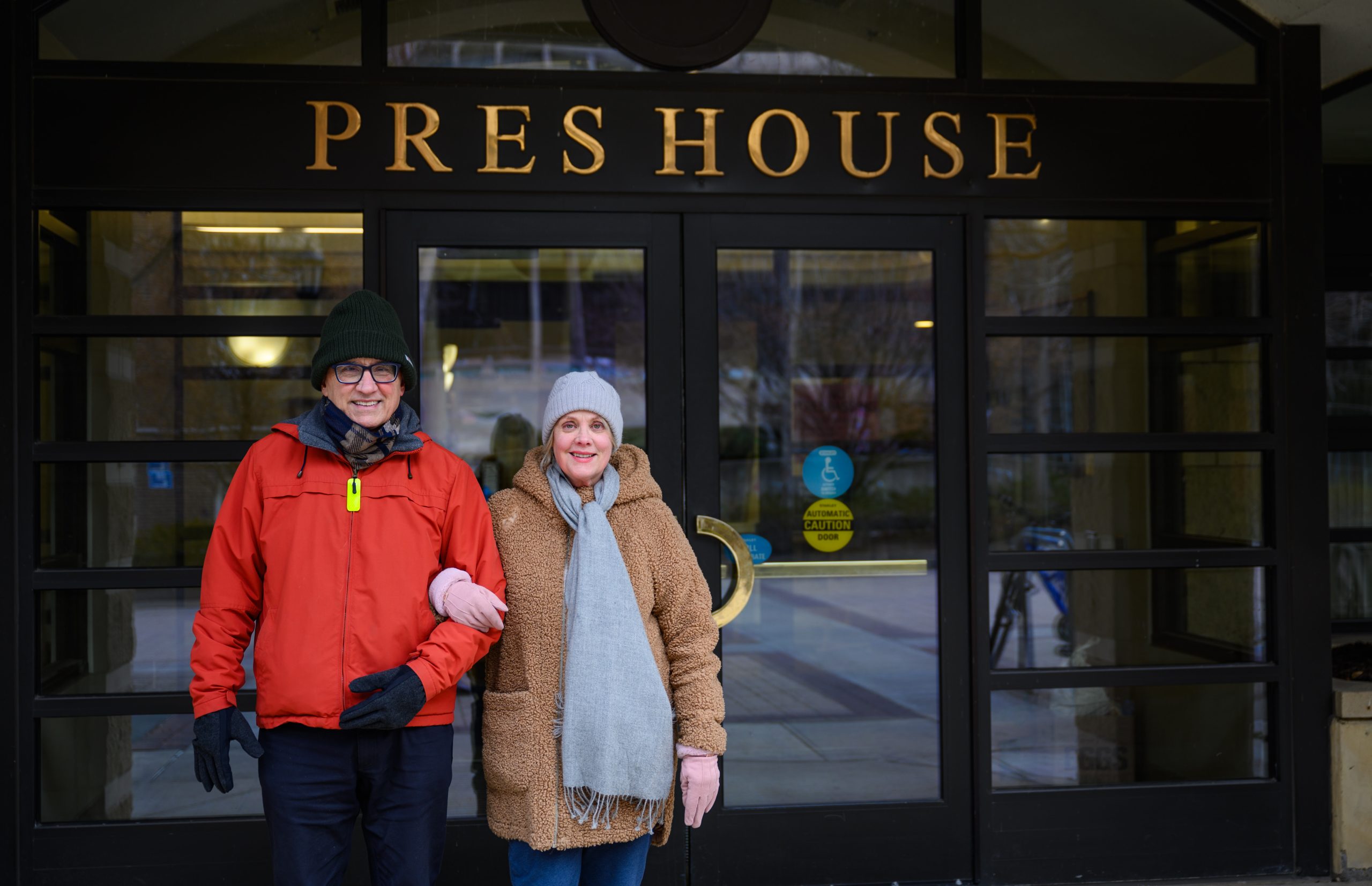
Annie Laurie Gaylor and Dan Barker in front of the Pres House for tax exemption lawsuit
FFRF co-presidents Annie Laurie Gaylor and Dan Barker in front of The Pres House

On January 14, 2025 FFRF and three Madison, WI residents filed a lawsuit challenging a tax law that exempts two rental properties owned by religious entities from paying property taxes. The law was specifically created to benefit the church-owned properties The Pres House and Lumen House Apartments in Madison, WI. The plaintiffs are FFRF co-presidents Annie Laurie Gaylor and Dan Barker, taxpayer David Peterson, and FFRF itself. 

This tax exemption began in 2009 when the Wisconsin Legislature enacted a property tax exemption to benefit the Pres House Apartments. Which is owned by the Presbyterian Student Center Foundation. Then, in 2013, the Legislature approved an amendment to benefit the Lumen House Apartments. Which is owned by the St. Raphael’s Congregation within the Diocese of Madison. Both of these are designed for student renters and are extremely profitable properties.

The Pres House Apartments’ current market value likely exceeds $25 million, with estimated property taxes owed in excess of $300,000 annually. Lumen House Apartments’ current market value likely exceeds $7.6 million, with estimated property taxes exceeding $94,000 annually.

The plaintiffs and Madison residents are forced to pay higher taxes to make up for the omission of these properties from the tax rolls. Further, it harms plaintiff FFRF, since it favors rental properties owned by two religious nonprofit organizations while excluding all other nonprofits that may desire to run future student apartments. 

FFRF’s lawsuit argues that the exemption is unlawful under the Wisconsin Constitution on several counts. The exemption violates the Uniformity Clause, the Equal Protection Clause, and the Establishment Clause of the Wisconsin Constitution. Additionally, it is unconstitutional as it was approved via a private bill by the legislature. The plaintiffs seek a declaratory judgment that would strike down the exemption.

On March 21, 2025 the Wisconsin State Senate moved to intervene in this lawsuit in order to defend the tax exemption.

Plaintiffs are represented by FFRF Staff Attorney Sammi Lawrence, Staff Attorney Nancy Noet, Legal Director Patrick Elliott, and Pines Bach attorney Christa Westerberg in Madison, WI. 

Case Documents

FFRF and Coalition Sue Over Law Requiring the Ten Commandments in Louisiana Classrooms

classroom with ten commandments overlayed. Louisiana Lawsuit.

On June 24, 2024 FFRF, the ACLU, the ACLU of Louisiana, and Americans United for Separation of Church and State filed a coalition lawsuit challenging a newly enacted law in Louisiana that would require all public schools to display the Ten Commandments.

This law mandates that every classroom display the Ten Commandments on “a poster or framed document that is at least 11 inches by 14 inches.” The commandments must be the “central focus” of the display and “printed in a large, easily readable font.” It also requires that a specific version of the Ten Commandments, which has been dictated by the state Legislature, be used for every display. Displays that depart from this state-sanctioned version of scripture would violate Louisiana law.

The complaint asserts that the statute violates long-standing U.S. Supreme Court precedent and the First Amendment. The Supreme Court previously overturned a similar state law in Stone v. Graham, holding that the separation of church and state bars public schools from posting the Ten Commandments in classrooms. No other state requires the Ten Commandments to be displayed in public schools. 

The complaint further alleges that Louisiana’s law “substantially interferes with and burdens” parents’ First Amendment right to direct their children’s religious education and upbringing, and that, in approving and mandating the display of a specific version of the Ten Commandments, the law runs afoul of the First Amendment’s prohibition against the government taking sides on questions of theological debate.

In November 2024, the District Court granted a preliminary injunction that prevented the defendants from implementing the statute. On June 20, 2025, 5th Circuit Court of Appeals upheld this decision. Unfortunately, on October 6, 2025, the 5th Circuit agreed to reconsider the prior ruling by granting a rehearing en banc.

Unfortunately, the 5th Circuit’s en banc decision vacated the federal district court’s November 2024 preliminary injunction.

Plaintiffs are represented by the Freedom from Religion Foundation, the ACLU, the ACLU of Louisiana, and Americans United, with Simpson Thacher Bartlett LLP serving as pro bono counsel. FFRF Senior Counsel Samuel Grover and FFRF Legal Director Patrick Elliott are serving as co-counsel on the case. The lawsuit is in the Middle District of Louisiana District Court with case number 3:24-cv-00517-JWD-SDJ.

Case Documents
District Court
5th Circuit

FFRF and Coalition Sue to Remove Arkansas Ten Commandments Monument

FFRF and a coalition of plaintiffs filed a lawsuit on May 23, 2018, seeking the removal of a massive Ten Commandments monument from the grounds of the Arkansas State Capitol.

Ten Commandments display in Arkansas

Arkansas lawmakers passed the Ten Commandments Monument Display Act in 2015, spearheaded by then-state Sen. Jason Rapert, to install a privately funded Ten Commandments monument on Capitol grounds. The monument was first installed in 2017, destroyed a day later, and replaced in 2018.

FFRF and its co-plaintiffs assert that this installation is an unconstitutional government endorsement of

religion. The plaintiffs include FFRF, the American Humanist Association, the Arkansas Society of Freethinkers, as well as seven individual plaintiffs who are religious and nonreligious citizens of Arkansas.

On March 31, 2026 the District Court ruled in favor of FFRF and its plaintiffs. Judge Kristine G. Baker struck down the state law mandating the monument and ordered that it be taken down. Her opinion concluded that both the law and the display violate the Establishment Clause of the First Amendment.

The lawsuit was consolidated with a case brought by the ACLU of Arkansas. The conjoined cases (No. 4:18-cv-00342) are before Judge Kristine G. Baker of the U.S. District Court for the Eastern District of Arkansas. Arkansas Attorney Gerry Schulze is representing the plaintiffs along with FFRF Legal Director Patrick Elliott and Senior Counsel Sam Grover.

Case Documents

FFRF Defends School Board Prayer Victory in Chino Valley, CA

Chino Valley logo superimposed over a background and hands

Original Lawsuit

In 2014, FFRF filed a lawsuit against the Chino Valley Unified School District Board of Education because of their unconstitutional practice of opening meetings with sectarian prayer, bible reading, and proselytizing. This lawsuit was on behalf of 22 local students, parents and employees who objected to the practice. In 2016, a U.S. district court ruled in FFRF’s favor. This decision was unanimously upheld by the 9th U.S. Circuit Court of Appeals in 2018, affirming that the board’s actions violated the First Amendment. As a result, the school district was ordered to pay more than $275,000 in FFRF’s legal fees.

New Lawsuit

The Chino Board of Education is now attempting to end a court injunction that prohibits board members from opening their public meetings with prayer. The board filed a motion to reopen the case on July 31, 2025, arguing that the injunction issued in 2016 by the U.S. District Court for the Central District of California should be lifted. The board incorrectly claims the U.S. Supreme Court’s 2022 decision in Kennedy v. Bremerton School District means that the legal basis for the district court order no longer exists.

FFRF’s original victory was upheld on October 10, 2025 by the district court. The court also granted FFRF’s requested attorneys’ fees of $134,006. In response, the Board has appealed the court’s decision to the 9th Circuit.

FFRF is represented by Attorneys Matthew Murray and Lisa Demidovich of Altshuler Berzon and Attorney Rich Bolton of Boardman Clark. Legal Director Patrick Elliott and Staff Attorney Sammi Lawrence are also serving as co-counsel.

Original lawsuit

Case Documents
District Court
Appeal to the 9th Circuit

Freedom From Religion Foundation