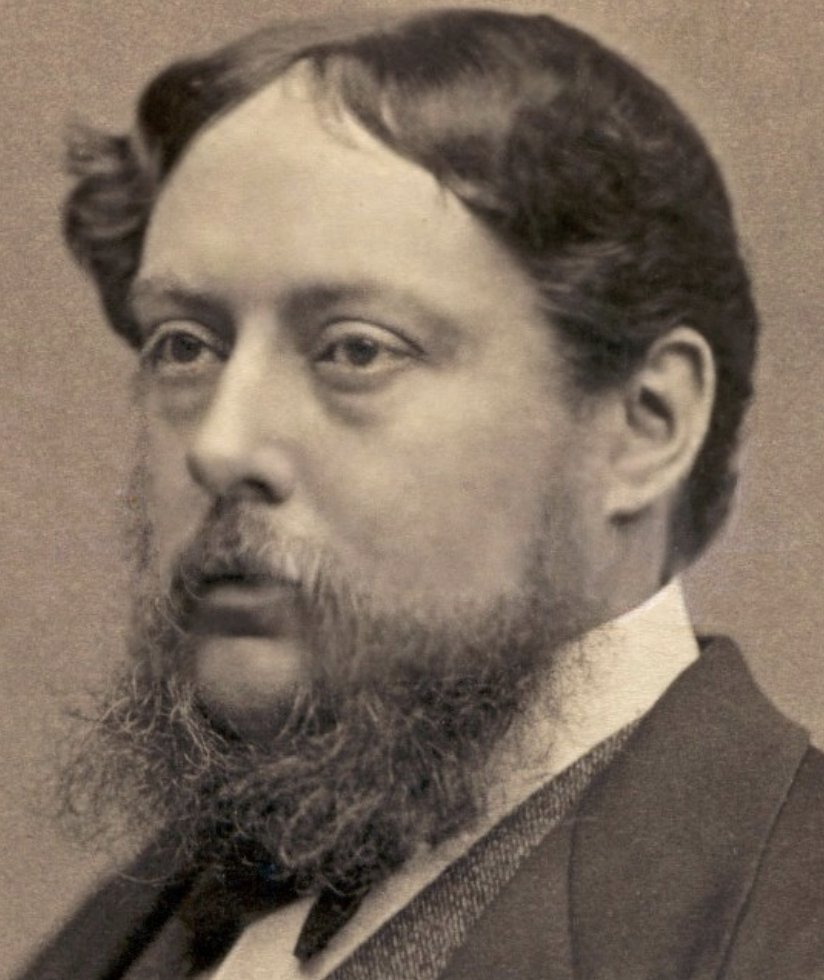

On this date in 1837, Richard Anthony Proctor was born in London. He attended St. John’s College, Cambridge, where he studied mathematics and theology, receiving his degree in 1860. Soon after graduation he began making astronomical observations and writing about astronomy for the general public. In them he connected astronomical ideas to the religious and intellectual debate then current about the possibility of life on other worlds.
He is best remembered for producing one of the earliest maps of Mars in 1867 from drawings by the observer William Rutter Dawes. Using 200-year-old drawings, he calculated the length of Mars’ sidereal day to within one-tenth of a second of its modern value.
He went on several lecture tours throughout the English-speaking world, including Australia, New Zealand and the U.S. He became a fellow of the Royal Astronomical Society in 1876. In 1881 he and his family moved to the U.S., where he lived for the rest of his life. He wrote 57 books, 500 essays and 83 scientific papers on astronomy.
Proctor was a Catholic from the time of his first marriage in 1860 but he later abandoned these beliefs for deism and, finally, agnosticism. Many of his later written works take a skeptical view toward religious and theological questions, such as the dismissal in his The Universe of Suns, and Other Science Gleanings of the possibility of the Star of Bethlehem being based on an astronomical event.
His largest and most ambitious work, Old and New Astronomy, left unfinished at his death, was completed by Arthur Cowper Ranyard and published in 1892. He died at age 51 of yellow fever in New York City in 1888.
